$90.99 Original price was: $90.99.$69.99Current price is: $69.99.
38 in stock (can be backordered)
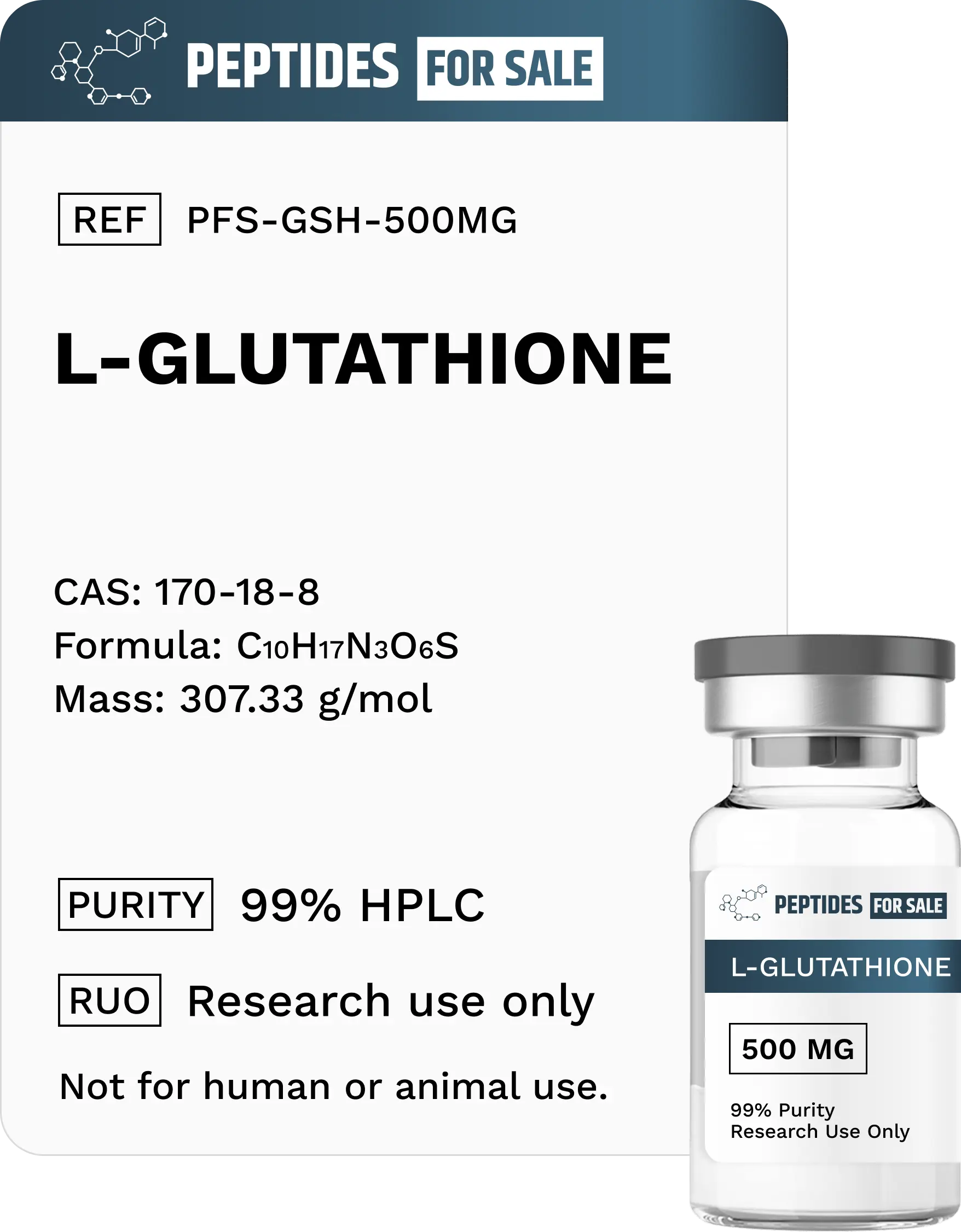
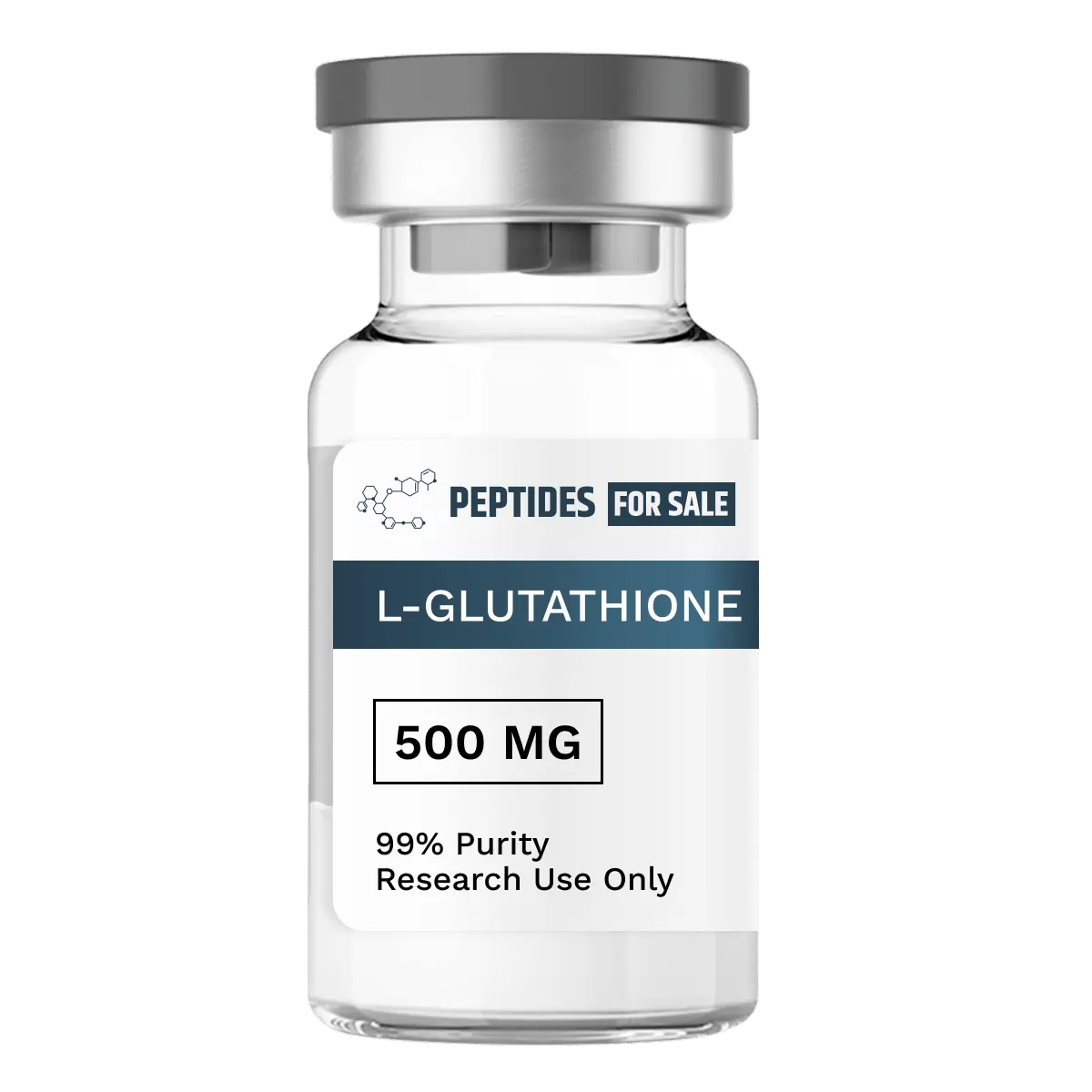
Reduced L-glutathione (GSH), the tripeptide γ-Glu-Cys-Gly, for redox biology and enzyme research. ≥99% HPLC purity, made in the USA. For research use only.
Glutathione (GSH) is a tripeptide made of glutamate, cysteine and glycine (γ-L-glutamyl-L-cysteinyl-glycine). The unusual gamma bond between glutamate and cysteine protects it from most peptidases, and the free thiol on cysteine gives it its reducing activity. This product supplies reduced L-glutathione for laboratory research.
Glutathione is the most abundant low-molecular-weight thiol in animal cells, typically present at millimolar concentrations. Cells synthesise it in two ATP-dependent steps catalysed by glutamate-cysteine ligase and glutathione synthetase. It serves as the electron donor for glutathione peroxidases, the substrate for glutathione S-transferases in conjugation reactions, and a buffer that keeps protein thiols reduced. The ratio of reduced to oxidised glutathione (GSH/GSSG) is one of the most widely used markers of cellular redox state.
For research use only. Not for human or veterinary use. Not a drug, food, or cosmetic. Sold to qualified researchers for in-vitro and laboratory research.
| Weight | 1500mg |
|---|