Thymalin is a synthetic tetrapeptide (Glu-Asp-Pro-Gly) derived from the thymus gland, one of the most critical organs in the human immune system. First isolated and studied by Russian scientists in the 1970s and 1980s, thymalin has emerged as one of the most researched immune-modulating peptides in the field of biogerontology and longevity science.
The thymus gland plays a central role in immune system development — specifically in the maturation and differentiation of T-lymphocytes (T-cells), which are essential for adaptive immunity. As we age, the thymus naturally involutes (shrinks), leading to a progressive decline in immune function known as immunosenescence. Thymalin research explores whether this peptide can partially reverse or slow this age-related immune decline.
Unlike many synthetic peptides, thymalin is not designed to mimic a single hormone or receptor. Instead, it functions as a biological response modifier — influencing multiple immune pathways simultaneously to restore homeostasis and optimal immune function in research models.
Thymalin exerts its research effects through several interconnected immune pathways:
Thymalin has been shown in multiple animal studies to support the differentiation and maturation of T-lymphocyte precursors into functional T-cells. This is particularly relevant in aged animal models where thymic involution has reduced natural T-cell output. Research suggests thymalin may partially restore this T-cell generation capacity.
Studies indicate thymalin influences the production and balance of key immune cytokines, including interleukins (IL-2, IL-6) and interferons. By modulating the cytokine environment, thymalin may help regulate both inflammatory and anti-inflammatory responses in research models.
Research in animal models has shown thymalin may enhance natural killer cell activity — critical for immune surveillance against abnormal cells and viral infections. NK cells represent a first-line immune defense, and their activity naturally declines with age.
Some studies suggest thymalin may upregulate endogenous antioxidant systems, including superoxide dismutase (SOD) and catalase. Oxidative stress is a primary driver of cellular aging, and antioxidant support may contribute to thymalin’s observed longevity effects in animal models.
Notably, research by St. Petersburg’s Institute of Bioregulation and Gerontology found that thymalin, when combined with the pineal peptide epithalamin, produced synergistic longevity effects in animal studies — extending lifespan by 20-40% in some murine models. This suggests thymalin may interact with neuroendocrine aging pathways beyond pure immune function.
The most cited thymalin research comes from the Institute of Bioregulation and Gerontology in St. Petersburg, Russia. Over decades of research, scientists including Vladimir Khavinson conducted extensive studies on thymalin and related thymus peptides. Key findings from animal studies include:
Multiple studies have used thymalin to model immune restoration in aged animals. Research consistently shows improvements in:
While most mechanistic research has been conducted in animal models, limited observational data from Russian clinical settings (where thymalin has been used as a pharmaceutical) suggest a favorable safety profile with minimal adverse effects at standard doses. However, robust randomized controlled human trials are limited.
Based on the available preclinical literature, thymalin is currently studied for:
Thymalin is often compared to other thymus-derived peptides in research settings:
Thymosin Alpha-1 is a 28-amino acid thymic peptide that is more studied in Western literature, particularly for hepatitis B, hepatitis C, and cancer immunotherapy. Key differences:
Epithalon (Epitalon) is a pineal-derived tetrapeptide, while thymalin is thymus-derived. Research suggests they work through complementary pathways — epithalon targeting neuroendocrine aging while thymalin targets immune aging. Some Russian protocols combine both for synergistic longevity effects.
BPC-157 is primarily studied for healing and tissue repair, while thymalin is immune-focused. They target different biological systems and are not direct comparators in most research protocols.
Note: The following reflects dosing used in animal and preclinical research only. Thymalin is not approved for human use and is sold for research purposes only.
Published research protocols have used a range of thymalin dosing strategies depending on the research objective:
Route of administration in animal research: intramuscular or subcutaneous injection, with intramuscular showing better bioavailability in some studies.
Based on available animal and observational research, thymalin shows a favorable safety profile:
As with all research peptides, thymalin should only be used by qualified researchers in appropriate laboratory settings. Human safety data from controlled clinical trials is limited.
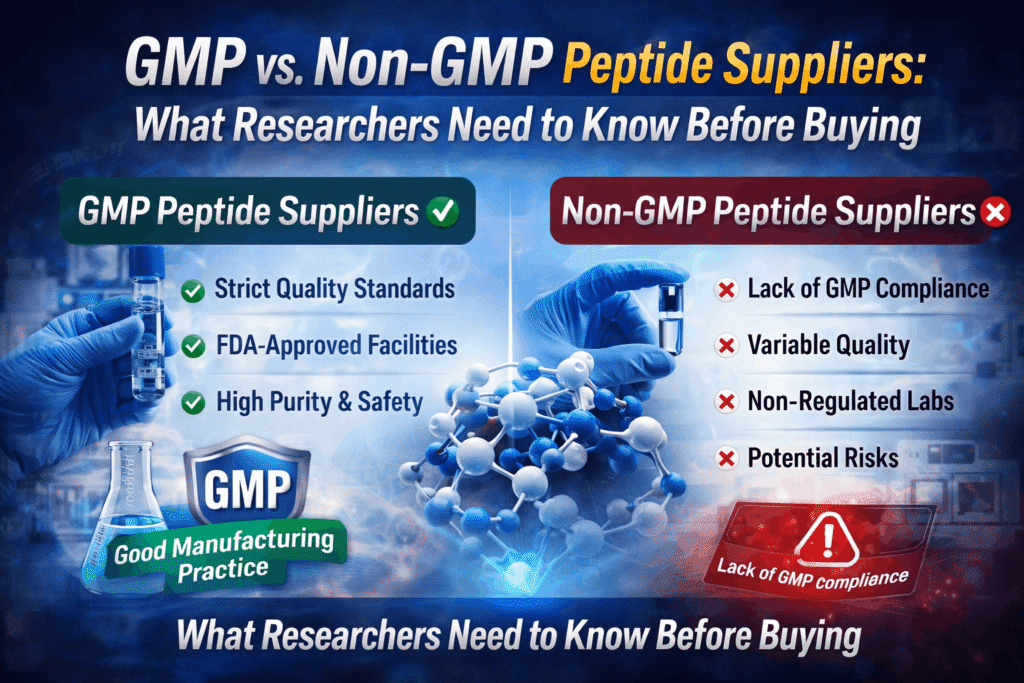
When sourcing thymalin for research, purity and manufacturing standards are critical. Key quality indicators to look for:
Research-grade thymalin is available from select USA-based peptide suppliers. When choosing a vendor, researchers should prioritize:
PeptidesForSale.us stocks Thymalin 10mg — USA-made, 99%+ purity, with third-party CoA verification. Fast domestic shipping with secure checkout.
No. Thymalin and thymosin are distinct peptides from different structural families. Thymalin is a synthetic tetrapeptide (4 amino acids); thymosin alpha-1 is a 28-amino acid peptide. Both are thymus-derived and immune-modulating but have different mechanisms and research applications.
In research settings, thymalin has been studied alongside epithalon (for synergistic longevity effects) and other bioregulator peptides. Combination protocols are common in Russian gerontology research but should only be conducted by qualified researchers following established protocols.
Thymalin should be stored lyophilized (freeze-dried) at -20°C for long-term storage. Once reconstituted, store at 4°C and use within 2-4 weeks. Avoid repeated freeze-thaw cycles which degrade peptide integrity.
The milligram designation refers to the quantity of peptide per vial. Research protocols vary in their dosing requirements; 10mg vials offer more flexibility for longer research cycles or higher-dose protocols.
Thymalin represents one of the most compelling peptides in immune-aging and longevity research, with decades of Russian biogerontology data supporting its potential to restore thymic function, enhance T-cell production, and support healthy immune aging in animal models.
For researchers exploring immune restoration, longevity protocols, or thymic biology, thymalin offers a well-studied research tool with a strong preclinical evidence base.
Disclaimer: This article is for educational and informational purposes only. Thymalin is sold for research use only and is not intended for human consumption, medical diagnosis, or treatment. All research should be conducted by qualified professionals in appropriate laboratory settings.