$39.99 – $59.99Price range: $39.99 through $59.99
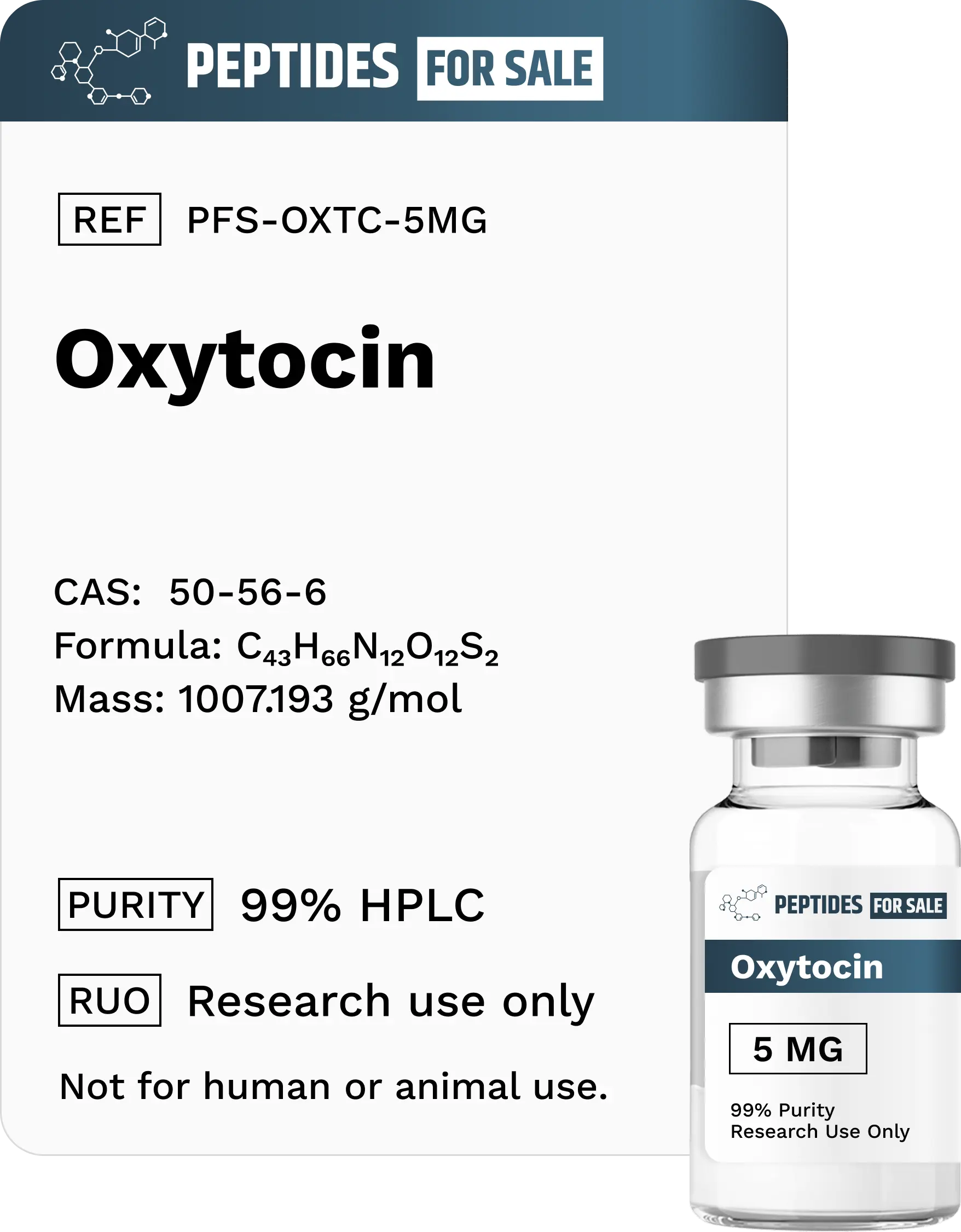
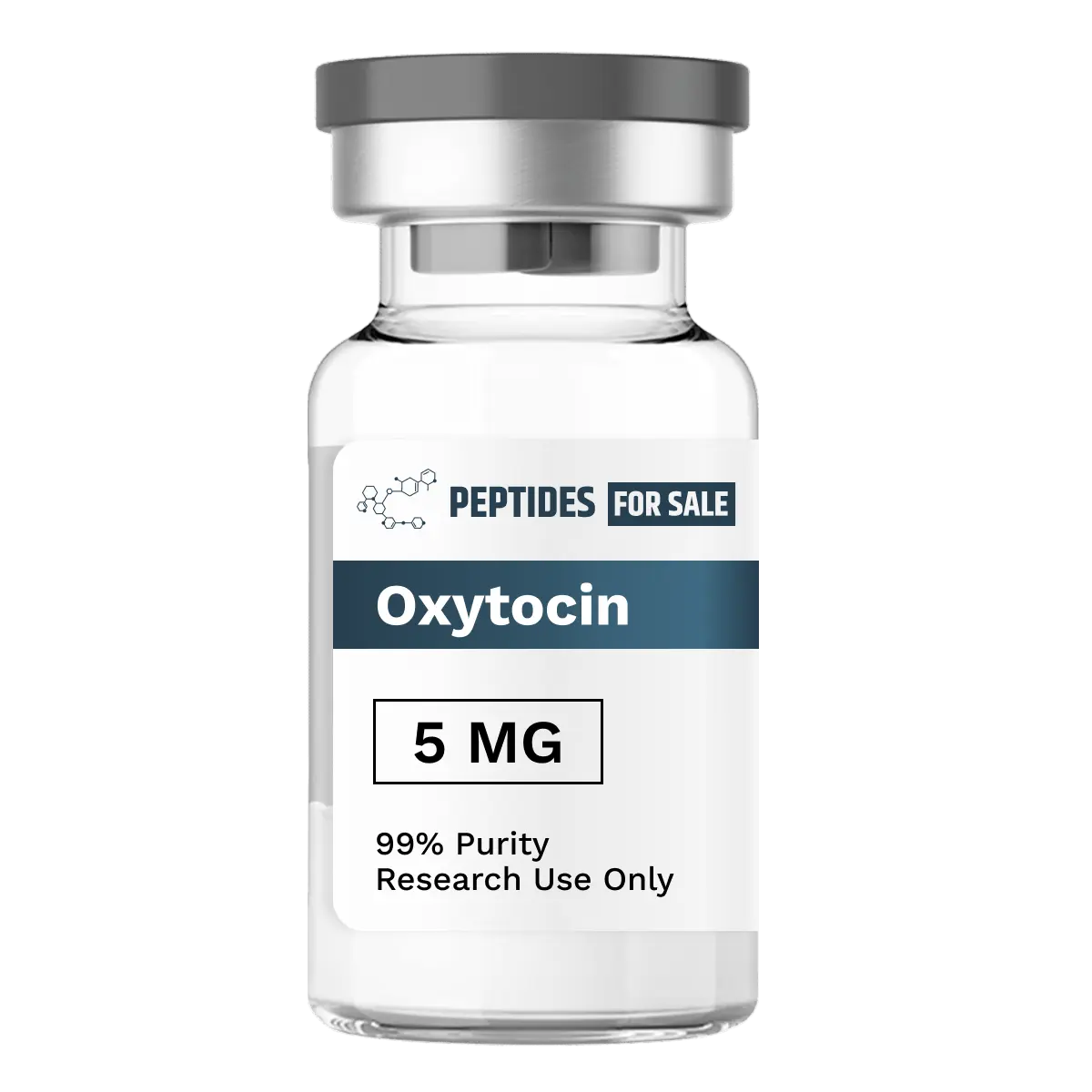
Oxytocin is a nine-amino-acid hypothalamic neuropeptide studied for oxytocin receptor signaling, social behavior in rodent models, and smooth muscle physiology.
Oxytocin is a nine-amino-acid neuropeptide (Cys-Tyr-Ile-Gln-Asn-Cys-Pro-Leu-Gly-NH2) produced in the hypothalamus and released from the posterior pituitary. A disulfide bond between its two cysteine residues forms a six-residue ring with a three-residue tail. Synthetic oxytocin is identical in sequence to the endogenous hormone.
Oxytocin acts through the oxytocin receptor (OXTR), a G protein-coupled receptor that signals mainly through Gq and phospholipase C, raising intracellular calcium. The receptor is found in the uterus, mammary tissue, and many brain regions, including the amygdala, nucleus accumbens, and hypothalamus. Oxytocin was the first peptide hormone to be sequenced and synthesized, work that earned Vincent du Vigneaud the 1955 Nobel Prize in Chemistry.
Classic studies used isolated uterine and mammary tissue to characterize its role in smooth muscle contraction and milk ejection. Behavioral research in rodents, particularly prairie voles, has linked central oxytocin signaling to pair bonding, maternal behavior, and social recognition. Other lines of work examine its interaction with the stress axis and its close structural relationship to vasopressin, which differs at only two positions.
Need a ready-made solution? See Oxytocin Spray.
For research use only. Not for human or veterinary use. Not a drug, food, or cosmetic. Sold to qualified researchers for in-vitro and laboratory research.
| Weight | (5mg x 2), 5mg |
|---|


